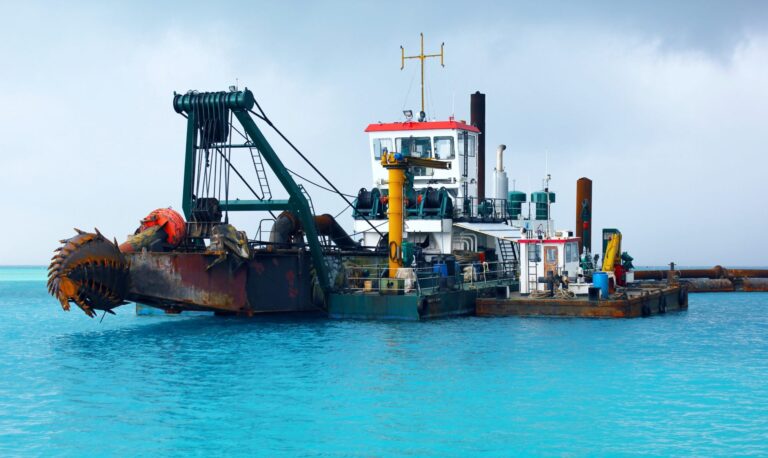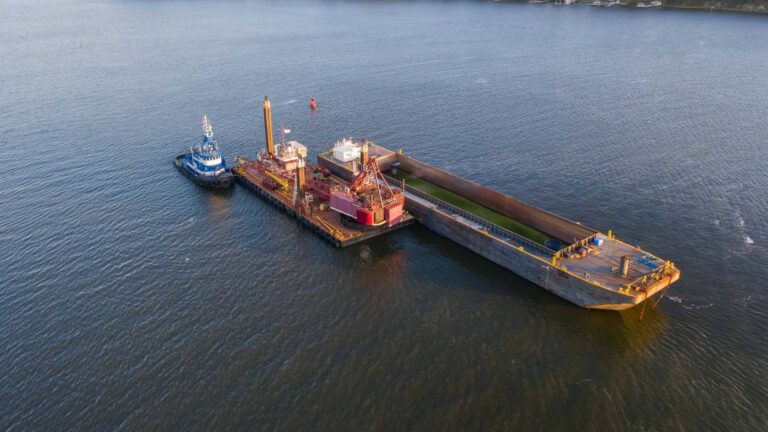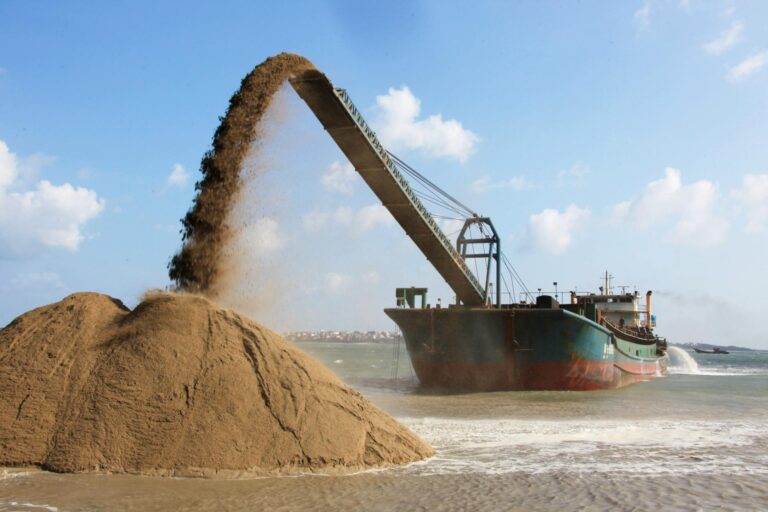

Dredging projects in Libya either succeed or fail at the planning stage. Water depth, bank stability, access for heavy equipment, and sediment type decide what will work long before a pump is switched on. This is why selecting the right Libya dredging equipment matters more than brand or size. On most sites, the real choice comes down to excavator-mounted dredges versus cable-float deployed dredges. Both are used across Libyan ports, coastal channels, and inland waterways, but under very different conditions. This article compares how each system performs on Libyan terrain and explains how the Pump and Dredge Hub supports contractors in selecting the appropriate setup for the job.
Libya Is Not One Dredging Environment: Why Equipment Choice Changes Project Outcomes
Libya’s dredging projects operate across very different site conditions. Coastal ports deal with recurring sediment build-up from wave action. Inland canals and lagoons face shallow water, soft banks, and limited access for heavy machinery. Some projects allow equipment to work directly from stable ground, while others do not support the weight of excavators near the edge at all.
Because of this variation, using the same Libya dredging equipment across all sites often leads to slow production, unsafe working conditions, or frequent relocation delays. The first decision is not pump size or discharge distance. It is whether the site can physically support an excavator working at the edge or whether the dredge must be deployed into the water using cables and floats.
This is where the split between excavator-mounted dredges and cable-float deployed dredges becomes important. Pump and Dredge Hub typically starts equipment selection by reviewing site access, ground stability, and operating depth before recommending either configuration. These basic factors usually eliminate the wrong option early and prevent costly changes once work has started.
Excavator-Mounted Dredges: When Direct Control Makes Sense on Libyan Sites
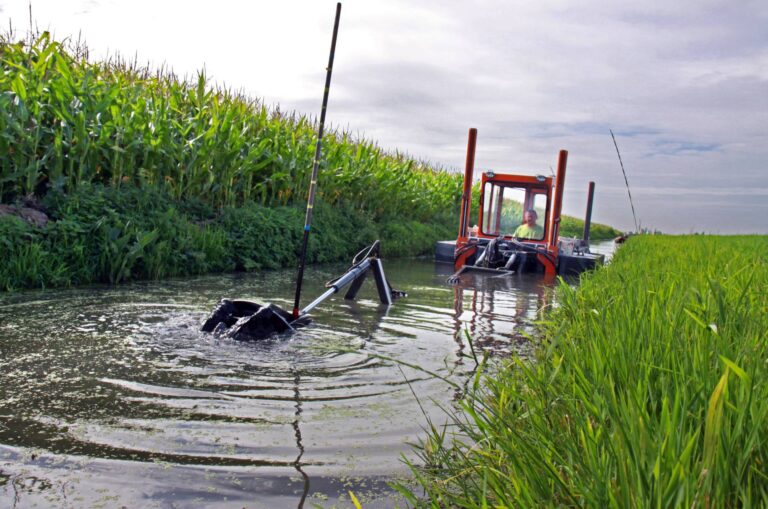
Excavator dredges are commonly used in Libya, where the work area is shallow, and equipment can operate from stable ground. The dredge pump is mounted on the excavator arm, allowing the operator to control the suction head directly while managing reach, depth, and material flow in real time.
This setup works well for canal cleaning, shoreline maintenance, drainage channels, and small port areas where precision matters more than long reach. Contractors already using excavators can mobilise quickly without bringing in additional floating platforms. Repositioning is fast, and trimming work along banks or structures is easier to control.
However, this configuration depends heavily on site access. Soft banks, weak soil, or restricted edges limit how close the excavator can safely work to the water. In deeper areas, production drops as the reach becomes a constraint. For these reasons, Pump and Dredge Hub typically recommends excavator dredges for Libyan projects with shallow depths, firm access points, and frequent relocation requirements, rather than for continuous deep-water dredging.
Cable-Float Deployed Dredges: Solving Depth and Access Limits on Libyan Projects
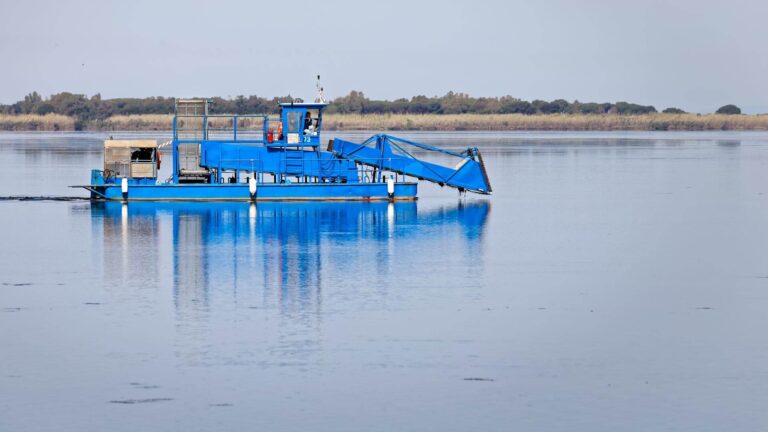
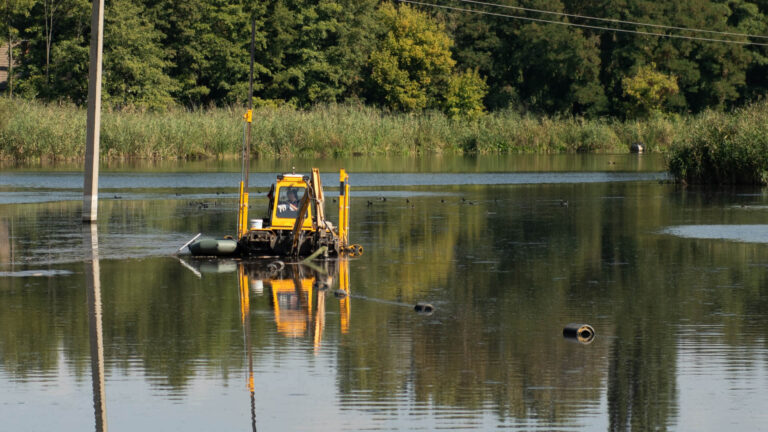
Cable-float deployed dredges are used when site conditions do not allow heavy equipment to work at the water’s edge or when dredging must reach beyond the safe working radius of an excavator. In this setup, the dredge pump is suspended and positioned using cables and floats, and is operated from a crane, excavator, or barge, depending on the site layout.
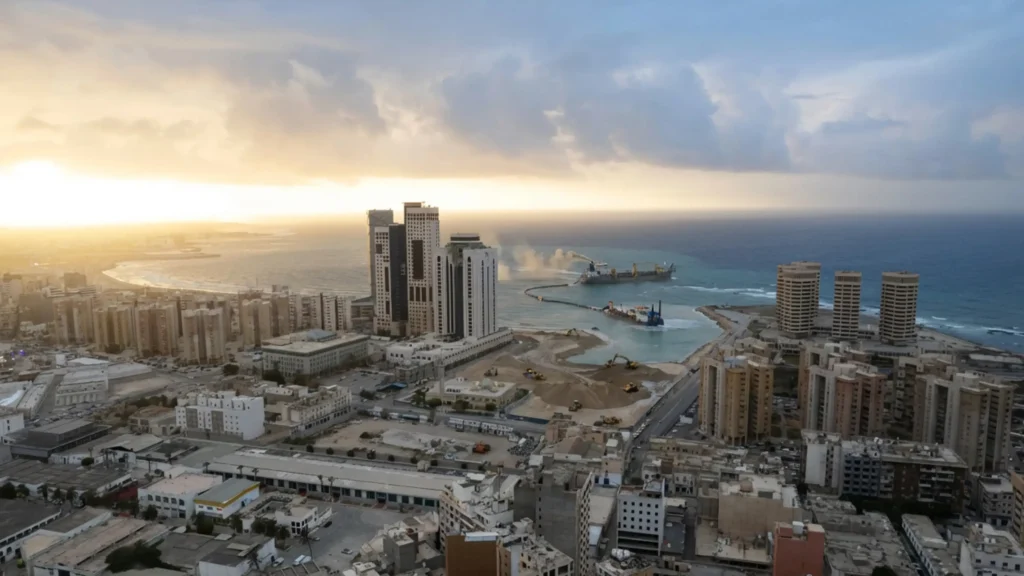
This approach is common on Libyan port maintenance projects, deeper lagoons, and coastal areas where bank stability is uncertain. Because the pump operates within the water body, depth and reach are less restrictive, and production remains more consistent over larger areas. It also reduces the risk of bank collapse or equipment instability, which is a frequent issue in soft or eroded coastal zones.
The trade-off is a slower initial setup and the need for disciplined cable handling and hose management. Once deployed, however, cable-float dredges often outperform excavator-mounted systems on deeper or wider sites. Pump and Dredge Hub supports Libyan contractors by configuring cable-deployed systems to match water depth, material type, and discharge distance, helping maintain steady output without requiring bank access.
Ground Conditions Decide More Than Pump Size
At Libyan dredging sites, ground conditions typically determine the equipment configuration before flow rate or discharge distance is considered. Firm, engineered edges allow excavators to work safely near the water, but many canals, lagoons, and coastal areas have soft or eroded banks that cannot carry sustained loads.
When banks are stable and access roads are reliable, excavator dredges remain practical. The excavator can approach the edge, maintain balance, and reposition easily as work progresses. Productivity stays predictable as long as the limits are not exceeded.

In contrast, weak soils, reclaimed land, or fluctuating water levels increase risk. Under these conditions, pushing an excavator closer to the edge often leads to delays, safety restrictions, or ground failure. Cable-float deployed dredges remove this dependency by shifting the working load into the water. Pump and Dredge Hub evaluates these site factors early, helping Libyan operators avoid overloading banks and select Libya dredging equipment that matches ground conditions, rather than forcing unsuitable setups on the project.
Material Type and Sediment Behaviour Change System Performance
Not all Libyan dredging projects deal with the same material. Fine silt from port maintenance behaves very differently from dense mud, compacted sand, or debris-heavy sediment found in canals and lagoons. These differences directly affect how excavator dredges and cable-float dredges perform on site.
Excavator-mounted setups work efficiently with loose material, where controlled positioning helps maintain steady suction. The operator can break up light compaction and adjust the intake angle, which is suitable for trimming work and shallow maintenance dredging. Performance drops when material becomes dense or when continuous agitation is required beyond the excavator’s reach.
Cable-float dredges handle variable material more consistently in deeper water. With the pump positioned directly in the dredging zone, material flow remains stable even as conditions change. This is especially useful for slurry with higher solids content or mixed debris. Pump and Dredge Hub factors sediment type into every equipment recommendation, ensuring the selected Libya dredging equipment can maintain flow without excessive downtime or wear.
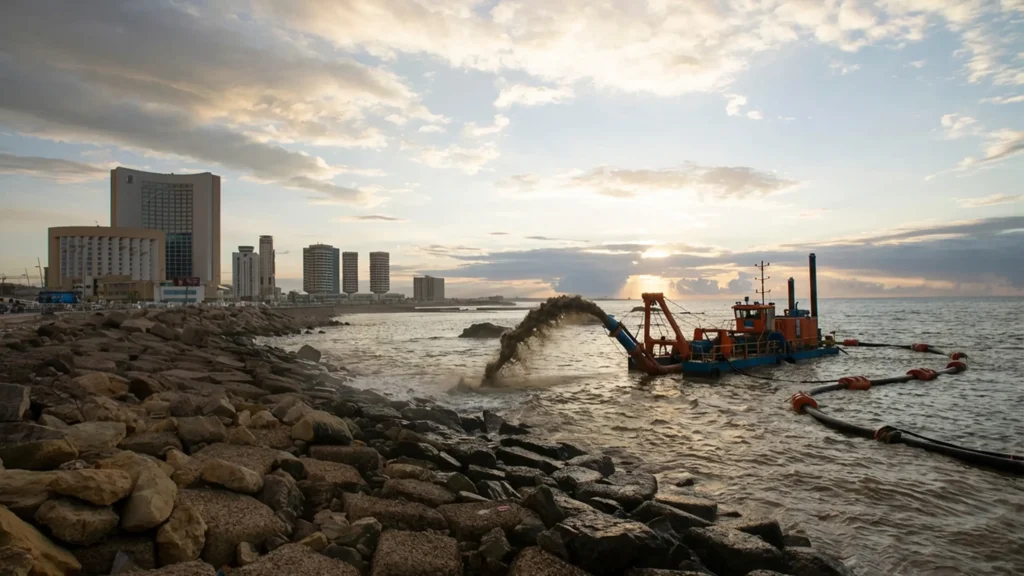
Production Reality: What Actually Slows Libyan Dredging Jobs
On paper, both systems can deliver similar flow rates. On-site production is usually limited by repositioning time, reach, and interruptions rather than pump capacity. This is where the difference between excavator dredges and cable-float dredges becomes clear.
Excavator dredges often lose time when the reach limits are reached, as the excavator backs away or repositions, and pumping stops. On narrow or segmented jobs, this is manageable, but on broader areas, it results in frequent downtime. Productivity depends heavily on operator skill and how often the machine must move.
Cable-float dredges require more planning at the start, but once positioned, they operate for longer continuous cycles. Fewer relocations and stable pump positioning usually translate into more consistent output on deeper or wider Libyan sites. Pump and Dredge Hub often reviews cycle time, not just pump specifications, when advising on Libya dredging equipment, because sustained production controls project timelines and costs.
Safety, Access, and Site Control Considerations
Safety issues at Libyan dredging sites are typically linked to access and ground stability, not to the pumping operation itself. When heavy equipment works too close to unstable banks, risk increases quickly. This is a common limitation for excavator dredges if site preparation is rushed or ground conditions change during the project.
Cable handling introduces a different risk profile. With cable-float deployed dredges, the focus shifts to controlled lifting, secure anchoring, and clear exclusion zones around moving lines and hoses. These risks are easier to manage when space allows proper layout and supervision.
Pump and Dredge Hub typically advises contractors to align safety planning with equipment selection. Choosing the right Libya dredging equipment early reduces on-site adjustments, avoids unsafe workarounds, and keeps operations within acceptable safety limits throughout the project.
Cost Structure: Where Projects in Libya Actually Spend Money
For most Libyan dredging projects, cost differences are driven by mobilisation, relocation, and downtime rather than the pump itself. This is why comparing excavator-mounted dredges and cable-float dredges based solely on purchase price provides an incomplete picture.
Excavator-mounted dredges often look economical when an excavator is already available on site. Initial setup is minimal, and short-duration or segmented work can be completed without additional floating support. Costs rise, however, when frequent repositioning, reach limitations, or bank reinforcement becomes necessary.
Cable-float dredges usually require higher upfront planning and setup. Once operating, they reduce relocation frequency and maintain steadier output on deeper or wider sites. For port maintenance or long continuous dredging runs, this stability often lowers total project cost. Pump and Dredge Hub evaluates these trade-offs when recommending Libya dredging equipment, focusing on total operating cost rather than equipment price alone.
How Contractors Can Choose Between the Two Systems
The choice between excavator-mounted dredges and cable-float dredges should be based on site constraints, not habit or availability. In Libya, projects that start without this evaluation often face redesigns after work has already begun.
Contractors should first confirm whether the bank or working platform can safely support an excavator at the required reach. If access is firm and water depth is limited, excavator-mounted systems remain efficient. When depth increases or ground conditions are uncertain, cable-float deployment becomes the more reliable option.
Pump and Dredge Hub supports this decision-making process by reviewing basic site data, including water depth, sediment type, access points, and discharge distance. Matching these factors to the correct Libya dredging equipment helps contractors avoid delays, reduce risk, and maintain predictable production throughout the project.
Where the Pump and Dredge Hub Fits Into Libya’s Dredging Decisions
Selecting between excavator-mounted dredges and cable-float dredges is rarely a one-step decision on Libyan sites. Most projects involve trade-offs between access, depth, material, and production targets. This is where the Pump and Dredge Hub plays a practical role, rather than merely serving as an equipment supplier.
Pump and Dredge Hub works with contractors to review site constraints before equipment is mobilised. This includes assessing whether excavator access is reliable, whether floating deployment is required, and how sediment type will affect pump performance. Based on these inputs, the team aligns the appropriate Libya dredging equipment configuration with the project rather than imposing a standard setup.
By focusing on deployment method, operating depth, and material behaviour early, Pump and Dredge Hub helps Libyan dredging projects start with realistic expectations and avoid changes that increase cost or disrupt schedules.
Final Takeaway for Libya Dredging Projects
There is no single dredging setup that works across all Libyan sites. Excavator-mounted dredges perform best where access is stable, water is shallow, and frequent repositioning is required. Cable-float deployed dredges are better suited to deeper water, wider working areas, and locations where bank stability limits equipment access.The key is to match site conditions to the appropriate deployment method from the start. When this decision is made early, production remains consistent, and risk is reduced. Pump and Dredge Hub supports this process by helping contractors select Libya dredging equipment that fits actual site conditions, not assumptions.